


Hand soap is the product you use most and think about least.
Six, eight, a dozen times a day. Before food, after the bathroom, after the bus, after the dog. No other cleanser in your house comes close to that frequency, which is exactly why hand soap is the one most likely to leave you with tight, itchy, cracked skin by February.
The encouraging part is that the fix is mostly free, and the product choice matters less than the two habits either side of it. But the product does matter a little, and there is one claim in this aisle that has been formally taken apart by regulators and still sits on shelves everywhere.
So this covers what to look for, what to ignore, and what to do about the dryness.
Related reading: natural body wash and soap, eco friendly cleaning products, our body wash collection, how we rate brands
Natural Hand Soap At A Glance
- Frequency is what dries your hands, more than any single ingredient.
- Antibacterial hand soap is not better than plain soap, and the FDA said so in 2016.
- Fragrance is the most common irritant, and the easiest thing to remove.
- Hot water does not help, and it makes the dryness considerably worse.
- Hand soap is mostly water, so concentrates and bars carry far less weight and packaging.
- Moisturizing afterward does more than any moisturizing claim on the bottle.
Why Hand Soap Is Different
Every other cleanser in your home gets used once or twice a day. Hand soap gets used all day, on skin that is already thinner on the backs of the hands, already exposed to cold air, already handling detergents and dishes and door handles.
That frequency changes the math. A cleanser that is perfectly mild once a day can become quite stripping at ten times a day, because your skin never gets the chance to rebuild the oils and the slightly acidic film that keep the barrier working.
Which means the useful question is not only what is in the bottle. It is how often you are using it, how hot the water is, and whether anything goes back onto your hands afterward.
Antibacterial Soap And The FDA Ruling
This is the clearest piece of evidence in the whole category, and a lot of people have never heard it.
In 2016 the FDA issued a final rule removing nineteen active ingredients, including triclosan and triclocarban, from consumer antiseptic hand and body washes. The reasoning was blunt: manufacturers had not demonstrated that these ingredients were any more effective than plain soap and water at preventing illness, and had not demonstrated that they were safe for daily long-term use. Concerns included bacterial resistance and hormonal effects.
What that leaves you with: for everyday handwashing at home, plain soap and water is the recommended approach by public health bodies. You are not compromising by choosing a soap with no antibacterial claim. You are choosing the thing the evidence supports.
Hand sanitizer is a separate product and remains useful where soap and water are unavailable. It works differently, through alcohol, and it is not what the 2016 ruling was about.
Why Your Hands Are Dry, And What Actually Helps
Four things, roughly in order of how much difference they make.
Turn the water down. Hot water does not meaningfully improve how many germs you remove. Research on handwashing has found water temperature makes little difference to bacterial reduction at any temperature a person can comfortably tolerate. What hot water does very effectively is strip lipids from your skin. Warm or even cool is fine.
Moisturize afterward, while hands are still slightly damp. This does more for cracked hands than any soap on the market. A simple cream or balm within a minute of drying traps the water still in the skin.
Choose fragrance-free. Fragrance is the most common cause of contact reactions in personal care, and in a product used ten times a day the exposure adds up. Worth knowing that essential oils count here. Citrus, lavender, and peppermint are all common sensitizers, so a naturally scented soap can irritate just as readily as a synthetic one.
Dry properly rather than leaving hands damp. Repeated wet-then-dry cycles are hard on the skin barrier, and residual moisture in cracks makes things worse.
And if your hands are cracking and bleeding, that is worth showing a doctor rather than solving in the soap aisle. Hand eczema is common, treatable, and does not respond to switching brands.
Bar, Liquid, Foaming, Or Concentrate
Four formats, and they differ more than you would expect.
Bar soap uses no plastic, contains no water to ship, and lasts a long time. The main practical issue is keeping it out of a puddle, since a bar sitting in standing water dissolves several times faster. A draining dish sorts it.
Liquid in a bottle is the default and the least efficient. You are paying to ship water in plastic to a room with a tap in it.
Foaming dispensers pre-dilute the soap and aerate it, so each pump delivers less product. In practice this means a bottle lasts considerably longer. Some research has questioned whether foam is as effective as liquid at removing bacteria, though technique and duration matter far more than format, so a proper twenty seconds resolves it either way.
Concentrates and refill bars are the interesting middle ground. You keep one durable dispenser and add a small concentrated bar or liquid plus your own water. You get the liquid format your hands may prefer with almost none of the packaging or freight.
The Bar Soap Germ Myth
Worth addressing, because it puts people off the lowest-waste option.
The concern is that a shared bar of soap harbors bacteria and passes them between users. It has been studied, and the research going back decades has found no meaningful transfer of bacteria from bar soap to the hands of subsequent users. Rinsing the bar, and the simple fact that you are washing with soap, handles it.
In a busy public washroom a dispenser makes sense for practical reasons. At home, a bar is fine.
Castile Soap And The pH Question
Castile soap is traditional soap made from vegetable oils, historically olive oil, rather than animal fats. It is a very old product, it works well, and it is popular in low-tox households because the ingredient list is short.
It is also true soap, which means it is alkaline, typically sitting around pH 9 to 10, while your skin is mildly acidic at around 4.7 to 5.5. For most hands most of the time that is fine. If your skin is dry, reactive, or eczema-prone, that repeated alkaline exposure at ten washes a day can be the thing tipping you over.
Two ways to handle it. Look for a superfatted soap, meaning one made with excess oils left unsaponified, which leaves more moisture behind. Or choose a pH-balanced syndet cleanser, which uses gentle synthetic detergents instead of saponified oils. We go into the difference properly in our body wash guide.
One more thing about castile: in hard water it reacts with dissolved minerals to leave a film, which is the slightly slippery residue people sometimes describe. Not harmful, and worth knowing if it happens to you.
What Is Worth Avoiding
Triclosan and antibacterial actives, covered above.
Synthetic fragrance, the most common irritant, and unnecessary in a product you rinse off in seconds.
Formaldehyde-releasing preservatives such as DMDM hydantoin and quaternium-15.
Harsh sulfates in high concentration, which clean thoroughly and strip more than frequently-washed hands want. Worth noting that the sulfate-free replacements are not automatically gentler, since cocamidopropyl betaine is itself a recognized allergen.
Artificial dyes, which do nothing at all.
And the words that certify nothing: natural, clean, pure, gentle, chemical-free, dermatologist-approved with no named body behind it.
Brands In Our Marketplace
Three options, and usefully they solve the problem three different ways. All evaluated through our rating process, and nobody pays for placement.
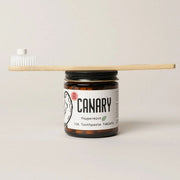

Canary
The answer for anyone who wants foaming liquid hand soap at the sink and would rather not keep buying bottles of water.
Their concentrated hand soap refill bars start at $12. You keep one foaming dispenser, drop in a concentrated bar, add water, and that is the whole system. Shipping a small solid bar rather than a full bottle of liquid removes most of the weight and all of the plastic, and the refills work out cheaper than replacing bottles. There is a starter bundle from $30 if you need the dispenser too.
The formulas use organic coconut, sunflower, and castor oils, with no parabens, phthalates, triclosan, artificial dyes, or SLS. Everything is vegan and made in the USA, they hold Leaping Bunny certification, and they are a 1% for the Planet member supporting groups including Protect Our Winters and Surfrider Foundation.
Worth knowing, from our evaluation: their bar soap contains palm oil, which is organic and noted as Fair Trade, so the usual deforestation and labor concerns are mitigated rather than absent. They also have not published energy use or emissions data, and there is no mention of renewable energy or offsets in their operations.
Canary has been rated by Shifting Gaia. See the full rating.


MamaSuds
The choice if fragrance is your problem, which for a lot of people with dry or reactive hands it is.
MamaSuds scores full marks with us on non-toxicity, and the reason is a consistent refusal to include anything questionable. No parabens, phthalates, formaldehyde-releasers, ammonia, chlorine bleach, synthetic musks, triclosan, or SLS anywhere in the range. Scent comes from essential oils only, there are no hidden proprietary fragrance blends, and they offer an unscented version of nearly every product, which is unusual and very useful.
Their unscented castile bar is $12 and the scented version $13, both 100% vegan. They also use zero palm oil across the whole range, which is rarer than it should be, and they have been family-run in Michigan since 2012.
Worth knowing: social responsibility is their weakest category by a distance. The production side is sound, being handmade in the US under US labor law, but they have limited visibility and no formal oversight further up the supply chain, no published supplier standards, and no structured charitable giving. Our evaluation reads that as the constraint of a very small business rather than a values problem, and it is a real gap either way.
MamaSuds has been rated by Shifting Gaia. See the full rating.
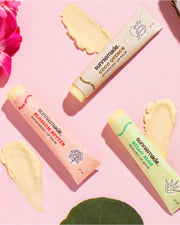
Sunniemade
The simplest option, and the cheapest. Their Very Rosemary hand and body bar is $8.50, works at the sink or in the shower, and arrives with no plastic at any point.
A small woman-owned business in Colorado, scoring full marks with us on non-toxicity. Their bars are free from SLS and SLES, parabens, and phthalates, and the solid format means no preservatives are needed at all. Packaging is recycled paper with soy-based inks, they offset their shipping emissions, and they are a 1% for the Planet member. The bars are mill-pressed, which makes them denser and slower to wear down.
They also make a draining aluminum soap tin at $11, which solves the one real drawback of bar soap at a busy sink.
Worth knowing: there is limited public information about their energy use, production footprint, and waste handling, which is common at this size and is the main thing keeping the sustainability score from going higher. Ingredient sourcing transparency also has room to improve.
Sunniemade has been rated by Shifting Gaia. See the full rating.
Washing Properly Matters More Than The Soap
Worth twenty seconds of your attention, since it beats every product decision above.
Twenty seconds of lathering is the recommendation, and most people do about half that. Whatever song you use, get to the end of it.
Cover everything. Backs of hands, between fingers, thumbs, under nails. Thumbs and fingertips are the most commonly missed.
Rinse thoroughly. Residue left on the skin contributes to irritation.
Dry completely, ideally with a clean towel rather than by rubbing hard.
Then moisturize, particularly at night, when a heavier balm has hours to work.
Natural Hand Soap FAQs
Is antibacterial hand soap better? No. In 2016 the FDA removed nineteen antibacterial ingredients including triclosan from consumer washes, because manufacturers could not show they outperformed plain soap and water or that they were safe for long-term daily use. Plain soap is what public health bodies recommend for home use.
Why are my hands so dry from washing? Frequency first, then hot water, then the soap itself. Washing ten times a day strips oils faster than skin rebuilds them. Turning the temperature down and moisturizing afterward makes more difference than switching products.
Does hot water kill more germs? Not at any temperature your hands can tolerate. Research has found water temperature makes little difference to bacterial removal. It does dry your skin out considerably.
Is bar soap unhygienic? No. Research going back decades has found no meaningful transfer of bacteria from a bar of soap to the next user. Rinse the bar and keep it somewhere it can drain.
What is castile soap? Traditional soap made from vegetable oils, historically olive oil. It is a true soap, which means alkaline, so it can be drying for sensitive or eczema-prone hands used many times a day.
Is foaming hand soap as effective? Technique matters far more than format. Foaming dispensers pre-dilute the soap so a bottle lasts longer, which is a real advantage. Wash for a full twenty seconds either way.
What should I look for in hand soap for sensitive skin? Fragrance-free first, including free of essential oils. Then a short ingredient list, no formaldehyde-releasing preservatives, and ideally a pH-balanced formula rather than a traditional alkaline soap.
Is natural hand soap better for the environment? Depends mostly on format. A bar or a concentrate removes the water and the plastic bottle, which is where most of the footprint sits. The formula matters for what goes down the drain and for your skin.
What is the most eco-friendly hand soap? A bar, or a concentrated refill in a dispenser you keep. Both avoid shipping water in plastic, which is the bulk of a conventional bottle's impact.
Final Thoughts
Hand soap is a small purchase that you make constantly, which makes it worth getting right once.
Skip the antibacterial claim, since the evidence does not support it. Go fragrance-free if your hands are at all unhappy. Choose a bar or a concentrate so you stop buying bottles of water. And then turn the tap down, wash for a proper twenty seconds, and put something on your hands afterward.
That last step is the one everybody skips and the one that actually fixes the cracked knuckles.
Shop rated hand and body soap in the Shifting Gaia marketplace. Every brand independently evaluated, no paid placements, ever.
Editor's note: Published September 2026. This is general information rather than medical advice. For persistent hand eczema or cracking, speak to a doctor.



























