


Lip products are the trickiest category to shop vegan, and the reason sits in the color itself.
That warm pink, the classic red, the berry tint that looks so good in the tube. A great deal of the time, that shade comes from carmine, a pigment made from crushed cochineal insects. It has been used for centuries, it produces a red that synthetic pigments struggle to match, and it appears on ingredient lists under names most people would never connect to a bug.
Which is why a lip gloss can be made by a brand with impeccable environmental credentials, packaged beautifully, free of everything you were told to avoid, and still not be vegan.
So this covers what to look for on a label, the alternatives that work just as well, and a couple of things worth checking in a lip product that have nothing to do with animals at all.
Related reading: vegan skincare, non-toxic nail polish, our makeup collection, how we rate brands
Vegan Lip Gloss At A Glance
- Carmine is the main culprit, and it is in a lot of pinks and reds.
- Beeswax and lanolin are the other two to watch, especially in anything balmy.
- Vegan and cruelty-free are separate claims. A product can be one without the other.
- Vegan says nothing about mica, which carries real ethical questions of its own.
- You do swallow some of it, which makes ingredient quality matter more here than in most makeup.
- Certifications to look for: PETA's vegan tier, Vegan Society, Certified Vegan, and Leaping Bunny for testing.
Vegan And Cruelty-Free Are Different Questions
Quickly, because the two get used interchangeably and they answer different things.
Vegan describes the formula: no animal-derived ingredients.
Cruelty-free describes the testing: no animal testing at any stage, including by suppliers.
A beeswax lip balm from a brand that has never tested on anything is cruelty-free and not vegan. A fully plant-based gloss from a company selling into a market that requires testing is vegan and not cruelty-free. You want both, and they need checking separately. We go into this properly in our vegan skincare guide.
The Animal Ingredients To Look For
Ingredient lists use technical names, which is most of why this is hard. These are the ones that matter in lip products.
Carmine, also listed as CI 75470, cochineal extract, or natural red 4. Made from cochineal insects, and the single most common reason a lip product is not vegan. Found in reds, pinks, berries, and plenty of nudes with warmth in them.
Beeswax, listed as cera alba or cera flava. Extremely common in balms and in the thicker, more emollient glosses, where it provides structure and a barrier.
Lanolin. Derived from sheep's wool, and an excellent emollient, which is exactly why it appears in so many lip treatments.
Shellac. A resin secreted by lac insects, used occasionally for shine and film-forming.
Guanine, listed as CI 75170. A pearlescent shimmer traditionally derived from fish scales.
Squalane. Worth checking rather than assuming. It was originally made from shark liver oil, and although most squalane today comes from olives or sugarcane, shark-derived squalane still exists. Look for a stated plant source.
Honey, propolis, and royal jelly, common in lip products marketed as nourishing.
Stearic acid and glycerin can come from plants or animals. The word alone does not tell you.
What Vegan Glosses Use Instead
The alternatives are good, which is worth saying, because a vegan formula is not a compromise on performance.
Candelilla wax and carnauba wax replace beeswax. Carnauba is harder and gives more shine, candelilla is softer and more pliable.
Iron oxides produce reds, browns, and warm tones without insects.
Plant pigments such as beet root and fruit extracts, used in tinted formulas.
Mica provides shimmer, with an important caveat below.
Synthetic fluorphlogopite, often called synthetic mica, which gives the same pearl effect and sidesteps the sourcing problems entirely.
Plant-derived squalane from olives or sugarcane, which behaves identically to the shark-derived version.
Plant butters and oils such as shea, cocoa, jojoba, and castor for the slip and cushion that lanolin used to provide.
Vegan Does Not Mean Ethically Sourced
This is the part we would most want you to take away, because it applies to nearly every shimmery lip product on the market.
Mica is a naturally occurring mineral that gives cosmetics their shimmer, and it is vegan. A significant share of the world's supply is mined in regions where child labor in small, informal mines has been documented repeatedly. A lip gloss can be certified vegan, cruelty-free, organic, and clean while containing mica nobody can trace.
What to look for: brands that state they source mica only from verified suppliers or audited mines, brands that participate in responsible sourcing initiatives, or brands that use synthetic fluorphlogopite instead. Any of the three is a meaningful answer. Silence is not evidence of a problem, and it does mean nobody has told you.
The wider point: vegan is an ethical position about animals, and it is a single question rather than a summary of a product's whole footprint. Petroleum is vegan. Palm oil is vegan. Unverified mica is vegan. It is one useful input among several, which is why we assess brands across sustainability, non-toxicity, and social responsibility separately rather than collapsing them into one badge.
A Few Things Worth Checking That Are Not About Animals
You swallow some of it. Lip products are the one category of makeup that reliably ends up inside you, which makes the ingredient list matter more here than for, say, eyeshadow. You may have seen a claim that women eat several pounds of lipstick over a lifetime. That figure has circulated for years with no solid basis and appears to be substantially overstated. The reasonable version is simpler: some ingestion happens, so a short, clean ingredient list is worth choosing.
Lead and heavy metals. Trace lead has been found in lipsticks in FDA testing, arriving through pigments rather than being added deliberately. The agency concluded the levels it measured did not pose a safety concern and has recommended an upper limit for manufacturers. Some advocacy groups take a more cautious view. Nobody suggests seeking it out, and brands that test their pigments and say so are worth preferring.
PFAS in long-wear formulas. Transfer-proof and long-wearing lip products have been found to contain PFAS, usually visible on a label as ingredients with "fluoro" in the name. Worth avoiding.
Fragrance and flavor. The most common cause of irritation in lip products, and easy to skip.
Essential oils. Peppermint and cinnamon in particular create the tingling sensation some plumping glosses market as a feature. That tingle is mild irritation, and on already thin lip skin it can make dryness worse.
The Packaging Problem
Lip gloss is one of the hardest cosmetic formats to recycle. The tubes are small, they combine several plastics with a doe-foot applicator and often a metal spring, and they are difficult to empty. Almost none of it is recyclable through curbside collection.
The realistic answers are refillable systems, multi-use products that replace several items, and simply finishing what you own. A gloss you use to the end is doing better than three half-used ones in a drawer.
Brands In Our Marketplace
Two options, assessed through our rating process. Nobody pays for placement.


IDUN Minerals
A Swedish mineral beauty brand, and the one on our shelves that answers both the vegan and the mica questions rather than just the first.
They hold both Leaping Bunny certification and PETA's Cruelty-Free and Vegan approval, which covers the testing question and the ingredient question separately. Worth knowing that the range is 99% vegan rather than 100%, with the remainder being reformulated. A brand that publishes 99% instead of rounding up tells you something about how it handles its other claims.
On mica specifically, which is the section above made concrete: they source only from suppliers verified not to use child labor. That is the kind of answer we look for and do not often find.
Their non-toxicity score is full marks. They formulate without parabens, phthalates, sulfates, and formaldehyde-releasers, use no microplastics, and have committed through ChemSec's No-PFAS Movement to avoiding PFAS entirely, which matters given the long-wear lip products mentioned above. Their mineral foundation is the only makeup product recommended by Asthma Allergy Nordic, so if your lips are reactive this is a reasonable brand to try first.
Worth knowing: sustainability is their weakest category. They have done real work on packaging, with mono-material redesigns and FSC paper replacing plastic compacts, and moved manufacturing into Europe to cut transport emissions. But the range still relies on plastic and they have not published carbon reporting or renewable energy commitments.
IDUN Minerals has been rated by Shifting Gaia. See the full rating.
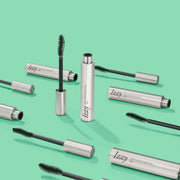
izzy zero waste beauty
Our highest-rated makeup brand, and the answer to the packaging problem described above.
Their Glossy Lip Butter is $27.95 and arrives in a medical-grade stainless steel tube engineered for over 10,000 reuse cycles. When you finish it, you send the tube back in a reusable mailer, they sterilize and refill it, and it comes back to you. Nothing is thrown away at either end.
The detail we find most impressive is how far they take that. Even the components nobody thinks about get reclaimed: the small plastic applicator parts are ground down and remolded for the next batch, the water used to sanitize returned tubes is filtered and reused on site, and there are no outer boxes, plastic wrap, or inserts at any point. Instead of a plastic label, the tube carries a laser-etched QR code. The whole system holds together because it is a subscription, so refills arrive on a schedule and empties go back, and there is a $25 fee if a tube does not return, which tells you how seriously they take the loop.
On the vegan question specifically, they are 100% vegan with PETA Cruelty-Free and Vegan certification, and the formulas use plant waxes such as jasmine, rice bran, and carnauba. No carmine, no beeswax.
Everything is made within a 400-mile radius in the northeastern US, which cuts out international freight, and they hold CarbonNeutral certification. A portion of every sale goes to the National Forest Foundation, Pencils of Promise, and Her Justice.
Worth knowing, from our evaluation: non-toxicity scores slightly lower than their packaging work because the formulas include a few synthetics for performance, including phenoxyethanol as a preservative, which is petroleum-derived and not readily biodegradable. Benzyl alcohol in the mascara sits on the EU allergen list, though sensitivity to it is rare and the quantity is low. Ingredient sourcing transparency is also thinner than the packaging story, with no stated RSPO certification for possible palm derivatives. As a newer independent brand they have not yet published a supplier code of conduct or independent audits.
Browse more in our lip care and makeup collections.
How To Check A Gloss Yourself
Takes under a minute.
1. Scan for the big three: carmine or CI 75470, cera alba, and lanolin. Those three account for most non-vegan lip products.
2. Check the shimmer. Guanine means fish scales. Mica means the sourcing question. Synthetic fluorphlogopite means neither.
3. Look for a real certification, rather than a leaf the brand's designer drew. PETA's vegan tier, the Vegan Society trademark, and Certified Vegan are the recognized marks.
4. Check for the dual claim. Brands holding both vegan and cruelty-free certification say both, because they were hard to get.
5. Treat "plant-based" carefully. It is not a certification and not a synonym for vegan. It usually signals a mostly-plant formula that may still contain beeswax.
6. Ask about mica if shimmer matters to you. Small brands answer this quickly, and the answer tells you plenty either way.
Vegan Lip Gloss FAQs
What makes a lip gloss not vegan? Most often carmine, a red pigment made from cochineal insects. Beeswax and lanolin are the next most common, followed by shellac, guanine, and honey-derived ingredients.
What is carmine in lip gloss? A pigment made from crushed cochineal insects, used for reds and pinks. It appears as carmine, CI 75470, cochineal extract, or natural red 4.
Is vegan lip gloss the same as cruelty-free? No. Vegan concerns ingredients, cruelty-free concerns animal testing. A product can be either, both, or neither, and the two need checking separately.
Is mica vegan? Yes, mica is a mineral. Whether it was ethically mined is a separate question, since child labor has been documented in parts of the supply chain. Look for brands that verify their suppliers or use synthetic mica.
Is vegan lip gloss better for your lips? Not automatically. Plant ingredients can irritate, and peppermint or cinnamon oils in plumping formulas cause mild irritation by design. A short, fragrance-free ingredient list matters more than whether the formula is vegan.
Do you really eat lipstick? Some ingestion happens, though the widely repeated figure of several pounds over a lifetime has no solid basis and is very likely overstated. The sensible conclusion stands either way: choose a clean, short ingredient list for anything you wear on your lips.
Is there lead in lip products? Trace lead has been detected in FDA testing, arriving through pigments rather than added deliberately. The agency judged the levels it found not to be a safety concern and has recommended an upper limit. Brands that test their pigments and say so are worth preferring.
What certifications should I look for? PETA's Cruelty-Free and Vegan tier, the Vegan Society trademark, or Certified Vegan for ingredients. Leaping Bunny for testing. Self-drawn logos mean nothing.
Is plant-based the same as vegan? No. Plant-based has no legal definition and generally indicates a mostly-plant formula, which may still include beeswax or other animal-derived ingredients.
Final Thoughts
Lip products are worth a closer look than most makeup, partly because of what ends up inside you and partly because the thing that makes them not vegan is the color, which is exactly the part you were choosing for.
The short version: check for carmine, cera alba, and lanolin, look for a certification you recognize rather than a leaf someone drew, and if the gloss shimmers, ask where the mica came from. That last question is the one almost nobody asks, and it is the one that separates a brand with good intentions from a brand that has done the work.
Shop rated makeup in the Shifting Gaia marketplace. Every brand independently evaluated, no paid placements, ever.
Editor's note: Published September 2026. We update our guides as brands reformulate.



























