


Here's a sentence we didn't expect to write: the most controversial thing in your kitchen might be a small squishy square you throw into a machine four times a week without a second thought.
Dishwasher pods are the perfect product, on paper. No measuring, no spills, no powder wedged in the corners of the box. Just grab, toss, close the door, feel briefly competent. It's one of the small pleasures of running a household.
And then someone on the internet tells you the pod is made of plastic, and now you're standing in your kitchen at 10pm googling "polyvinyl alcohol" with wet hands.
So let's sort this out properly, because the answer is more interesting than either camp will tell you. We'll get into what's actually in conventional dishwasher detergent, what the PVA research does and doesn't say, why powder beats pods on most measures, and which of our rated brands are worth your money. Fair warning: we're going to end up being slightly annoying about nuance. It's kind of our thing.
Related reading: our dishwashing collection, how we rate brands, sustainify your kitchen, laundry
Non-Toxic Dishwasher Detergent At A Glance
- The pod film is a real question, not a settled one. Most pods and tabs are wrapped in PVA, a water-soluble plastic. Whether it fully biodegrades in real-world wastewater treatment is contested.
- Powder sidesteps the argument entirely. No film, no per-dose wrapper, and you can dose it to the actual dirtiness of your load.
- Fragrance is the biggest non-toxic red flag. A single word on the label can stand in for dozens of undisclosed ingredients.
- Phosphates are mostly gone from US household dishwasher detergent, so that particular fight is largely won. Chlorine bleach and dyes are the ones still worth avoiding.
- The packaging is half the story. A "clean" formula in a plastic tub you'll throw away every six weeks is doing less than you think.
Every brand we stock has been independently evaluated before it earns a place in the marketplace, and we don't accept paid placements. Ever. You can read exactly how we rate if you want to see the criteria in full.
Wait, Is There Plastic In My Dishwasher Pod?
Short answer: yes, technically, in most of them.
That squishy film holding the detergent together is usually polyvinyl alcohol, or PVA (sometimes written PVOH). It's a synthetic polymer — so, a plastic — but an unusual one, because it's specifically engineered to dissolve in water. That's the whole point of it. Drop the pod in, film disappears, detergent does its thing.
The question isn't whether it dissolves. It does, obviously, or your pod would still be sitting there at the end of the cycle. The question is what happens after it dissolves, once it's travelled down your drain and into the wastewater system.
And this is where things get properly messy.
What the research actually says
In 2021, two researchers at Arizona State University, Charles Rolsky and Varun Kelkar, published a modelling study estimating how much PVA from laundry and dishwasher pods survives US wastewater treatment. Their model suggested roughly three-quarters of it ends up back in the environment — mostly via sludge that gets spread on farmland, some via treated water. Their argument was that PVA can biodegrade fully, but only with the right microbes and enough time, and most treatment plants don't reliably provide either.
That study became the basis of a 2022 petition asking the EPA to require more safety testing on PVA and to strip it of its Safer Choice designation.
Now the other side, which matters just as much.
The EPA denied that petition in 2023, and not gently. Its published response said the petitioners had leaned on a single modelling study while overlooking a body of existing biodegradation, toxicity, and bioaccumulation data that was publicly available. An independent expert panel convened afterwards also found significant flaws in the modelling and concluded that real-world degradation is likely far higher than the study predicted. And it's worth knowing — because we'd want to know — that the study was partly funded by a cleaning brand whose entire product line is PVA-free. That doesn't make the findings wrong. It does mean the "75%" figure you see quoted everywhere came from research with a commercial interest attached, and it's being repeated as settled fact when it isn't.
So what do we actually do with that?
Here's our honest position, and it's not the exciting one.
PVA is not the microplastic catastrophe some marketing would have you believe. It is also not the boring, fully-resolved non-issue the industry would prefer. It sits in that irritating middle ground where the lab data is reassuring, the real-world data is thinner than anyone would like, and reasonable scientists disagree about how much that gap matters.
What we'd say is this: if there's a format that avoids the debate entirely, is usually cheaper per wash, and comes with less packaging anyway — and there is, it's called powder — then you don't really need to resolve the PVA question to make a good decision. You can just step around it.
That said, if pods are the only format that fits your life, a pod from a brand with a clean formula still beats a conventional supermarket tab by a wide margin. Perfect is not on the menu. It rarely is.
What Else Is In Conventional Dishwasher Detergent
The film gets all the attention, which is a bit unfair on the rest of the ingredient list.
Fragrance. The single biggest thing we'd change about most people's cleaning cupboard. "Fragrance" or "parfum" is a legal umbrella that can cover dozens of undisclosed compounds, some of them phthalates, none of them listed. It's also completely pointless in a dishwasher — you're perfuming a sealed metal box, and any of it that lingers ends up on the plate you eat off. Unscented and fragrance-free dishwasher detergent isn't a compromise here. It's arguably the upgrade.
Chlorine bleach. Effective at stain removal, rough on the environment when it hits wastewater, and capable of forming unpleasant byproducts. Oxygen-based bleaching (sodium percarbonate, usually) does the job with far less collateral damage, and nearly every better brand uses it.
Dyes. Your detergent does not need to be blue. Nobody has ever needed the detergent to be blue.
Phosphates. Good news, actually. Phosphates caused algal blooms that choked freshwater ecosystems, and after state-level bans and an industry phase-out around 2010, they've been largely out of US household dishwasher detergent for well over a decade. Most "phosphate free dishwasher detergent" labelling is now marketing a thing that's nearly universal. Nice to see the label, but don't pay extra for it.
The tub. A big rigid plastic container, technically recyclable, realistically often not, replaced every month or two forever. Cardboard cartons, refill pouches, and bulk refills are where the actual waste reduction happens.
What Makes A Dishwasher Detergent Sustainable
When we're evaluating a brand for the marketplace, this is roughly what we're weighing up:
The full ingredient deck, disclosed. Not "plant-derived cleansers" as a category, but the actual list. Brands that won't tell you are telling you something.
Fragrance-free, or transparently scented. Essential-oil scenting is fine if disclosed. Undisclosed "fragrance" is where things get murky.
Real cleaning performance. This gets skipped in eco round-ups and it drives us slightly mad. A detergent that leaves a film on your glassware means you rerun the cycle, and a rerun wipes out the entire environmental benefit of your careful shopping. Effective is not the opposite of sustainable. Effective is sustainable.
Packaging you won't be embarrassed by. Cardboard, refill pouches, bulk sizes, take-back. Anything but a fresh plastic tub every six weeks.
Concentration. Shipping water around the country is a strange thing to do at scale. Powders and concentrates win here on sheer logistics.
The company behind it. Labour practices, emissions, giving, and whether "sustainability" is structural or just a font choice. Our full criteria are here if you want the detail.
Pods vs Tabs vs Powder vs Gel: Which Format Actually Wins
This is the part most articles skip, and it's the part that'll save you the most money.
Powder is our favourite. No film, no per-dose packaging, ships as a concentrate, and — the underrated bit — you can dose it. A load of lightly used breakfast plates does not need the same detergent as a roasting tin. With pods you're stuck with one dose forever, which means most households are systematically overdosing most of their washes. Powder usually works out cheapest per cycle by a decent margin, and it comes in cardboard or refillable containers rather than a rigid tub.
The catch: it can clump in humid kitchens, and you have to actually measure it, which some mornings feels like a lot.
Tabs (the pressed kind) are the middle ground, and the format worth knowing about. A compressed detergent tablet with no wrapper at all gives you pod-style convenience with none of the film debate. These are what people are usually looking for when they search for plastic-free dishwasher tablets — they exist, they're just less common than the wrapped kind.
Pods are film-wrapped doses, and everything above applies. The most convenient format, especially if there are other people in your household whose relationship with dosing instructions is aspirational at best.
Gel is the least talked-about option and better than its reputation. It dissolves reliably in short and cold cycles where powder sometimes struggles, it's gentle on glassware, and it's dosable. The downside is that you're shipping water, so it's the heaviest option per wash — best bought in a large refill rather than small bottles.
Our take: powder for most households, an unwrapped tab if you want convenience without the film, gel if you run a lot of eco or quick cycles, and a clean-formula pod if the format is what keeps you consistent. The best detergent is the one you'll keep using.
Rated Non-Toxic Dishwasher Detergent Brands
These are the brands in our marketplace that make detergent for the actual machine — powders, tabs, gels, and pods. Each has been through our rating process before we'd stock it. We've noted honestly where each one has a trade-off, because they all do.
Green Llama
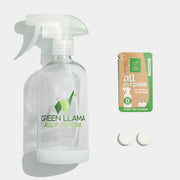


Price: From $15.95
If you came to this article specifically looking for dishwasher tablets without the plastic film, this is the product. Green Llama's dishwasher tabs are fragrance-free and PVA-free, which means you get the drop-it-in-and-walk-away convenience of a pod without any of the film question we just spent 600 words on.
Fragrance-free is doing real work here too — no undisclosed scent compounds, nothing lingering on the plates, and a much better bet if anyone in the house is sensitive to that sort of thing.
They also do a dish starter kit and a kitchen bundle if you'd rather change over the whole sink at once, which is usually how these things go anyway.
Worth knowing: unwrapped tabs are more sensitive to humidity than pods are, so keep them sealed and away from the steam. And as with any low-alkalinity formula, very hard water may want a rinse aid alongside.
Rustic Strength


Price: Powder from $31, gel from $32, rinse aid from $18
Rustic Strength is the one to look at if you'd rather buy detergent the way a restaurant does: rarely, and in quantity. They cover the full machine lineup — automatic dishwasher powder, a citrus gel, and rinse aid in both unscented and lightly scented versions.
The refill-first model is the real story. Buying a large container that lasts months, rather than a plastic tub that lasts six weeks, is a bigger packaging win than almost any formula tweak. Their gel is also the option we'd point you toward if you mostly run short or eco cycles, where powders occasionally don't fully dissolve.
Worth knowing: the upfront price is higher because the quantities are larger. Per wash it's very competitive, but it's a bigger initial outlay, and you need somewhere to put it.
MamaSuds

Price: $25, or $5 for the sample
MamaSuds makes an automatic dishwasher powder with the kind of short, legible ingredient list that makes this whole category feel less exhausting. No fragrance, no dye, no film, nothing you need to look up.
The useful thing here is the sample size at $5. Dishwasher detergent performance depends enormously on your specific machine, your water hardness, and how you load — which is why one person swears by a product another person returns. Being able to test before committing to a full tub is a small thing that we wish every brand in this category did.
There's also a vegan dishwashing trio if you want the machine and the sink handled together.
Worth knowing: simple mineral-based powders can struggle in very hard water. If you get a chalky film, that's your water, not the detergent — a rinse aid usually sorts it.
Common Good


Price: From $19
Common Good's dishwasher powder is the design-conscious pick, and we mean that as a compliment rather than a euphemism. The brand is built around refills, so the intention is that you buy the vessel once and then keep topping it up, which is the correct model for a product you'll buy forever.
If aesthetics are part of what keeps you actually using something rather than shoving it under the sink, that counts for more than eco-purists like to admit. A sustainable product you're happy to leave on the counter gets used.
Worth knowing: priced at the premium end for the volume. You're partly paying for the packaging design, which is either worth it to you or isn't.
Puracy
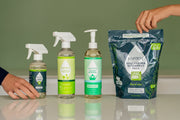
Price: From $9.99
And here's where we practise what we preached earlier about nuance.
Puracy's dishwasher detergent pods are a pod, which means yes, they use a PVA film — Puracy lists it openly in their ingredients, which we appreciate rather than penalise. What's inside is a properly clean, enzyme-driven formula: sodium citrate, sodium carbonate, sodium percarbonate, plant-based cleansers, protease and amylase enzymes. No phosphates, chlorine bleach, dyes, or added perfume in the Free & Clear version. They're septic and greywater friendly, and the enzymes mean you can skip pre-rinsing, which saves a surprising amount of water over a year.
So: if PVA is your line in the sand, buy the Green Llama tabs. If your real constraint is that you need a format your household will use correctly without supervision, and you'd rather that pod have a transparent, well-formulated ingredient list than a mystery one, this is the pick. Both of those are legitimate positions.
Worth knowing: it's the most affordable option on this list, and the enzyme formula handles hard water well, which not all natural detergents do.
Don't Forget Rinse Aid & Dishwasher Cleaner
Two products people skip, both of which determine whether your natural detergent seems to "work."
Rinse aid is the fix for about 80% of complaints about eco dishwasher detergent. Cloudy glasses and white film are usually a hard water problem, not a detergent problem — dissolved minerals dropping out onto your dishes as they dry. Rinse aid changes how water sheets off the surface so it runs away instead of drying in place. If you've switched to a natural detergent and been disappointed, try this before you give up on the detergent entirely.
Dishwasher cleaner is the other one. Machines accumulate grease, limescale, and food debris in the filter and spray arms, and a clogged machine cleans badly no matter what you put in it. A monthly clean improves results, and it extends the life of an expensive appliance, which is its own kind of sustainability.
You'll find both in our dishwashing collection, alongside brushes and scrubbers for the sink.
How To Get Better Results From A Natural Dishwasher Detergent
Most "it doesn't clean as well" experiences come down to one of these, and they're all fixable.
Clean the filter. Bottom of the machine, twists out, rinses under the tap. Do it monthly. This is the highest-impact thing on the list and almost nobody does it.
Scrape, don't rinse. Enzyme detergents need something to work on, and pre-rinsing washes away the food they're designed to break down. It also wastes a startling amount of water.
Check your water hardness. Hard water is behind most cloudy-glass complaints. Rinse aid, a slightly larger detergent dose, or a dishwasher salt if your machine takes it will all help.
Don't run cold-and-quick with powder. Short eco cycles sometimes don't run long or hot enough to fully dissolve a powder. Gel or a tab handles this better.
Load it properly. Nothing blocking the spray arms, nothing nesting, dirty faces pointing inward and down. A badly loaded machine will defeat any detergent ever formulated.
Skip the vinegar hack. It circulates constantly online, and many appliance manufacturers advise against it because acid degrades rubber seals and gaskets over time. A purpose-made dishwasher cleaner does the same job without shortening your machine's life.
Is A Dishwasher Actually Greener Than Handwashing?
Yes — with a caveat, and the caveat is you.
Research out of the University of Bonn has looked at this repeatedly, and the finding is consistent: a full, well-loaded modern dishwasher uses substantially less water and energy than the average person washing the same dishes by hand. Machines are just far more efficient at reusing a small volume of hot water than a running tap is.
The caveat is the word "full." A half-empty machine run every day loses that advantage fast. And someone who washes carefully in a basin rather than under a running tap can beat a machine. But for the way most people actually wash up — tap running, water going down the drain the whole time — the dishwasher wins comfortably.
So run it, run it full, skip the pre-rinse, and use the eco cycle. It's longer, which feels counterintuitive, but it's longer precisely because it uses less heat.
Non-Toxic Dishwasher Detergent FAQs
Are dishwasher pods actually made of plastic? The film is polyvinyl alcohol, a synthetic polymer engineered to dissolve in water — so yes, technically a plastic, though not the kind that shows up as visible fragments. What's contested is whether it fully biodegrades in real-world wastewater treatment. If you'd rather not have that argument, unwrapped tabs and powders don't use film at all.
What's the safest dishwasher detergent? Look for a fully disclosed ingredient list, no added fragrance, no chlorine bleach or dyes, and oxygen-based bleaching instead. Format matters less than formula for the health side of things — a clean powder and a clean pod are similar on your plate. Format matters more for the environmental side.
Is powder or pod better? Powder, for most people. No film, less packaging, cheaper per wash, and you can adjust the dose to the load rather than overdosing every cycle. Pods win only on convenience — but convenience is a real factor if it's what keeps you consistent.
Do I need phosphate-free dishwasher detergent? You almost certainly already have it. Phosphates were phased out of US household dishwasher detergent around 2010, so it's now close to universal. It's a fine label to see, but not a differentiator worth paying extra for.
Why does my natural detergent leave a white film? Nine times out of ten that's hard water rather than the detergent, and rinse aid is the fix. Also check your filter, and make sure you aren't underdosing.
Is unscented dishwasher detergent less effective? No. Fragrance contributes nothing to cleaning. It's there for the impression of clean, not for clean itself, and in a dishwasher it's arguably worse than useless since any residue ends up on the plates you eat from.
Are eco dishwasher detergents more expensive? Per box, sometimes. Per wash, often not — especially with concentrated powders and bulk refills, where the cost per cycle usually undercuts supermarket pods. Compare cost per load rather than cost per package.
What about handwashing dish soap? Different product, different job. Never put hand dish soap in a dishwasher unless you'd enjoy a kitchen full of foam. We stock plenty of solid bars and concentrated liquids for the sink in the dishwashing collection.
Final Thoughts On Non-Toxic Dishwasher Detergent
If you skim one paragraph, make it this one: the PVA debate is real but unresolved, and you don't have to resolve it. Buy powder or an unwrapped tab, go fragrance-free, get a rinse aid if your water is hard, clean your filter, and run the machine full. That's the whole thing.
What we'd gently push back on is the idea that this needs to be agonising. Dishwasher detergent is a small, repeated purchase, and small repeated purchases are exactly where switching once pays off hundreds of times without you thinking about it again. Make the swap, then go and think about something more interesting.
And if you've been feeling guilty about using the dishwasher at all — don't. Running it full is very likely the greener choice. You have our permission to leave the pan until tomorrow.
Shop rated, plastic-free dishwashing in the Shifting Gaia marketplace. Every brand independently evaluated, no paid placements, ever.




























