


Let's start by clearing out two phrases, because they are on half the bottles in this category and neither one means anything.
"Chemical-free" is not possible. Water is a chemical. Vinegar is a chemical. Every substance you have ever cleaned anything with is a chemical, including the ones squeezed from plants. What people mean is "free of chemicals I have heard bad things about," which is a reasonable thing to want and a different thing to say.
"Non-toxic" is unregulated, which is awkward for us to point out in an article about non-toxic cleaning. Toxicity depends on the substance, the concentration, and the exposure. Essential oils are natural and some are more irritating than the synthetics they replaced.
None of which means the concerns behind those phrases are wrong. There are real reasons to change what you clean with, and there is solid research behind some of them. But the useful version of this conversation is specific rather than vibes-based, so here is what is actually worth avoiding, what the evidence says about whether green cleaners work, the distinction between cleaning and disinfecting that almost nobody gets right, and what to buy.
Related reading: non-toxic dishwasher detergent, our cleaning collection, how we rate brands, refill and save
Eco Friendly Cleaning At A Glance
- Fragrance is the biggest real issue, not the scary-sounding surfactants.
- Cleaning and disinfecting are different jobs. Most natural cleaners are good at the first and legally cannot claim the second.
- Vinegar is not a disinfectant, and vinegar plus baking soda mostly makes salt water.
- You are buying water. Most cleaners are over 90% water shipped in plastic. Concentrates fix this.
- Green cleaners do work for ordinary household soil. The gap has closed considerably.
- Reusable tools matter as much as the liquid. Cloths, brushes, and refills are where the waste is.
What Is Actually Worth Avoiding
Specific ingredients, specific reasons.
Synthetic fragrance. The single biggest one, and the least discussed. "Fragrance" or "parfum" is a legal umbrella covering dozens of undisclosed compounds. Cleaning products are also a major indoor source of volatile organic compounds, and some fragrance terpenes such as limonene and pinene react with indoor ozone to form secondary pollutants including formaldehyde. If you change one thing, make it this.
Quaternary ammonium compounds (quats). Common disinfectants, and associated in occupational research with asthma and respiratory irritation among people who use them heavily.
Chlorine bleach. Effective and very useful in specific situations. Also a respiratory irritant, and dangerous when mixed. More on that below.
Ammonia. Same category: works, irritates, dangerous in combination.
Phthalates. Often present as fragrance carriers, which is another reason fragrance is the thing to look at.
Triclosan and antibacterial additives in general-purpose products. Largely removed from consumer soaps after regulatory action, and rarely necessary in household cleaning.
Optical brighteners in laundry products, which coat fabric to make it look brighter without cleaning it.
The research that made people pay attention: a long-running Norwegian study published in 2018 followed thousands of adults over two decades and found that women who cleaned regularly, whether professionally or at home, showed accelerated decline in lung function compared with those who did not. The effect size drew comparisons to smoking. It was an observational study and it has caveats, but it moved this from a wellness topic to a public health one, and it is the strongest single argument for ventilating while you clean and using fewer aerosols.
Cleaning Versus Disinfecting
This is the most useful distinction in the whole category and it is routinely blurred, including by brands that should know better.
Cleaning removes dirt, grease, and a large proportion of germs physically, by lifting them off a surface and rinsing or wiping them away. Soap and surfactants do this by design. For the vast majority of household surfaces, this is all that is needed.
Disinfecting kills specified pathogens to a specified standard. In the US, disinfectants are regulated as pesticides by the EPA and must be registered, with an EPA registration number on the label. A product without that number cannot legally claim to kill germs, and if it says something like "kills 99.9% of bacteria," it has been through that process.
Why this matters practically:
Most natural and plant-based cleaners are excellent cleaners and are not registered disinfectants. That is not a failure. It is a different product doing a different job.
Vinegar is not a disinfectant. Acetic acid has some antimicrobial activity in laboratory conditions and it is not reliable against household pathogens. It is a decent cleaner, particularly on mineral scale, and it should not be your answer after handling raw chicken.
Most homes need disinfecting rarely. After raw meat, when someone is ill, and around a surface you know is contaminated. Daily disinfection of every surface is unnecessary, contributes to the exposure problems described above, and is largely a habit the pandemic left behind.
When you do need it, use a registered disinfectant, follow the contact time on the label, which is usually far longer than people leave it, and ventilate. Hydrogen peroxide and some plant-derived actives such as thymol are registered and considerably gentler than quats or bleach.
Do Eco-Friendly Cleaners Actually Work?
The honest answer, since this is the question behind a lot of hesitation.
For ordinary household soil, yes. Grease, food residue, soap scum, dust, and general grime respond to surfactants regardless of whether those surfactants came from petroleum or coconuts. The chemistry of removing dirt is not exotic, and formulation quality has improved enormously over fifteen years. Early green cleaners in the 1990s and 2000s frequently were worse, and that reputation has outlived the reality.
For heavy-duty specific tasks, sometimes not. Serious limescale, mold in grout, and set-in stains may need something stronger, and there is no shame in owning one aggressive product for one job rather than pretending a plant-based spray will do everything.
For disinfection, only if registered. See above.
The most common reason a green cleaner disappoints is not the formula but the technique. Conventional cleaners are often formulated with more solvent and more fragrance, which produces a fast visual result and a smell people read as "clean." Plant-based products frequently need slightly longer dwell time, meaning you spray it and let it sit for a minute before wiping, rather than spraying and immediately scrubbing.
That single habit closes most of the performance gap people report.
You Are Mostly Buying Water
Here is the sustainability point that gets least attention and matters most.
A typical spray cleaner is over 90% water. When you buy one, you are paying to have water put in a plastic bottle in a factory, trucked across the country, and delivered to a shop, so that you can carry it home to a building that already has water in it.
The fix is concentrates and tablets. You buy the bottle once, then buy small refills, tablets, or concentrated liquid and add your own water. The reduction in shipping weight, packaging, and cost per use is substantial, and there is no performance trade-off because the product is identical once diluted.
Bulk refills are the other route: large containers refilled from, which cut packaging per use dramatically if you have the storage.
This is the change we would make first, ahead of any ingredient switch, because it addresses the largest part of the footprint and usually saves money.
The DIY Reality Check
Homemade cleaners are having a moment and some of them are excellent. Others are internet folklore.
What works: dilute white vinegar on limescale and glass. Baking soda as a gentle abrasive. Castile soap as a general cleaner. Hydrogen peroxide as a mild bleaching agent and registered disinfectant at appropriate concentration.
What does not: vinegar mixed with baking soda, which is the most popular cleaning hack on the internet and mostly theater. The fizzing is the acid and the base neutralizing each other, and what you are left with is largely salt water and carbon dioxide. It is fun and it is not a cleaner. Use them separately.
Where DIY falls short: surfactants. Emulsifying grease so it can be rinsed away is the thing store-bought cleaners do well and kitchen ingredients do poorly.
And the safety rules, which are not optional:
Never mix bleach with ammonia. Produces chloramine gas. Never mix bleach with vinegar or any acid. Produces chlorine gas. Do not mix cleaning products at all unless you know exactly what is in both.
People are hospitalized for this every year, frequently while trying to be more thorough.
Certifications Worth Looking For
EPA Safer Choice reviews every ingredient in a formula against safety criteria. The most substantive certification in this category in the US.
EWG Verified requires full ingredient disclosure and avoidance of ingredients on their lists of concern.
MADE SAFE and Cradle to Cradle both apply broader screens, the latter including manufacturing and circularity.
Leaping Bunny for cruelty-free, which matters here because cleaning products have historically been animal tested.
And the ones that mean nothing: natural, green, eco, clean, non-toxic, chemical-free, plant-derived. All unregulated.
One useful thing to know: California's cleaning product disclosure law requires manufacturers to list ingredients online and on-pack. Because companies do not produce separate formulas per state, this effectively gave the whole US market ingredient transparency. If a brand claims it cannot tell you what is in its product, that is now a choice.
Rated Cleaning Brands
Twenty-one brands in our cleaning range, so rather than list all of them, here are the ones that solve distinct problems. All have been through our rating process, and nobody pays for placement.


Rustic Strength
For buying the way a restaurant does: rarely, and in quantity. Fifty products across the range, built around a bulk refill model, with fragrance-free options throughout.
The refill-first approach is the single biggest lever described in this article. Buying a large container that lasts months, rather than a new plastic bottle every few weeks, cuts more waste than any reformulation.
Worth knowing: higher upfront cost because the quantities are larger, and you need somewhere to keep it. Per use it is very competitive.
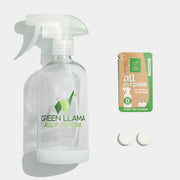

Green Llama
For getting the plastic out entirely. Tablets and concentrates that you drop into a reusable bottle with your own water, which solves the shipping-water problem directly rather than partially.
Their dishwasher tabs are notably PVA-free, which is unusual and which we covered at length in our dishwasher detergent guide. Fragrance-free across much of the range.

MamaSuds
For short ingredient lists. The kind of formula where you can read the label and know what everything is, without a search engine. No fragrance, no dye, no filler.
They also sell sample sizes, which is more useful in this category than it sounds, because cleaning product performance depends on your water hardness and your surfaces. Testing before committing to a full bottle avoids the most common form of sustainable-shopping waste.


Common Good
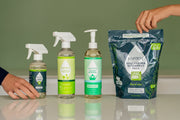
For products you will actually leave on the counter. Built around refills, with packaging designed to be kept rather than hidden. That matters more than eco-purists tend to admit: a product you are happy to have visible is a product that gets used rather than shoved under the sink.
Worth knowing: premium pricing for the volume, and part of what you are paying for is the design.
Puracy
For the lowest price point on this list, with enzyme-driven plant-based formulas and fragrance-free options. Enzymes are worth understanding here: they break down specific soils such as protein, starch, and grease biologically rather than by brute-force solvency, which is why enzyme cleaners often outperform expectations on organic stains.
The Tools Matter As Much As The Liquid
Easy to overlook, and this is where a surprising share of cleaning waste actually sits.
Disposable wipes are the worst offender in the category. Usually polyester, unrecyclable, frequently flushed when they should not be, and a major cause of sewer blockages. A cloth does the same job.
Microfiber cloths clean extremely well and shed microplastics with every wash. If you own them, keep them and wash them in a filter bag. If you are buying new, cotton, linen, and cellulose alternatives work well.
Swedish dishcloths, made from cellulose and cotton, absorb enormously, wash in the machine, last months, and compost at the end.
Natural fiber brushes with wooden handles and plant bristles replace plastic brushes that shed as they wear.
Wool dryer balls replace dryer sheets entirely, cutting drying time and removing a disposable product coated in fragrance and softener from your routine.
We stock reusable tools from Bamboo Switch, NO TOX LIFE, Desesh, Love of Earth Co., and Friendsheep across the cleaning collection.
Where To Start If You Are Switching
You do not need to replace everything at once, and doing so would be wasteful. Use what you have, then replace in this order.
1. Anything scented that you use often. Fragrance is the biggest exposure and the easiest swap.
2. Aerosols. They put the most product into the air you breathe. Trigger sprays and wipe-on products reduce inhalation substantially.
3. Your most-used all-purpose cleaner, switched to a concentrate or tablet so you stop buying water.
4. Disposable wipes and paper, switched to reusable cloths.
5. Everything else, gradually, as things run out.
And ventilate. Open a window while you clean. It costs nothing and addresses the exposure route that matters most.
Eco Friendly Cleaning FAQs
Do eco-friendly cleaning products actually work? For ordinary household dirt, yes, and the performance gap has largely closed. Allow slightly longer dwell time before wiping, which is where most reported disappointment comes from. For disinfection specifically, you need an EPA-registered product.
What does "non-toxic" mean on a cleaning product? Legally, nothing. It is unregulated. Look instead for full ingredient disclosure and certifications such as EPA Safer Choice, EWG Verified, or MADE SAFE.
Is vinegar a disinfectant? No. It is a reasonable cleaner, especially for limescale, and it is not reliable against household pathogens. Do not use it as your answer after handling raw meat.
Does vinegar and baking soda work as a cleaner? Not really. They neutralize each other, leaving mostly salt water and carbon dioxide. Both are useful separately and largely cancel out together.
What is the difference between cleaning and disinfecting? Cleaning physically removes dirt and most germs. Disinfecting kills specified pathogens to a regulated standard and requires an EPA registration number. Most surfaces most of the time only need cleaning.
Are plant-based cleaners safe for septic systems? Generally yes, and most brands state it explicitly. Avoid bleach and antibacterial products, which disrupt the bacterial process a septic tank depends on.
Are eco-friendly cleaning products more expensive? Per bottle, sometimes. Per use, often less, particularly with concentrates and bulk refills where you stop paying to ship water. Compare cost per use rather than per package.
What is the most important switch to make first? Anything fragranced that you use frequently, followed by aerosols. Those two changes address most of the indoor air exposure.
Are cleaning products tested on animals? Some still are. Look for Leaping Bunny certification rather than the phrase "cruelty-free," which is unregulated.
What cleaning products should I never mix? Never combine bleach with ammonia or with any acid including vinegar. Both combinations produce toxic gases. As a general rule, do not mix cleaning products at all.
Final Thoughts
The cleaning aisle runs on a slightly odd premise, which is that a clean home requires a large arsenal of specialized liquids, most of which are water, and most of which smell like something no plant has ever produced.
What actually gets a house clean is a decent surfactant, a cloth, some warm water, a bit of patience, and disinfectant used occasionally rather than constantly. The rest is packaging and fragrance.
So the practical version: go fragrance-free, switch to concentrates so you stop buying water, keep a registered disinfectant for the two or three situations that need one, use cloths instead of wipes, and open a window while you work.
That is a shorter shopping list than you currently have, which is generally a sign you are on the right track.
Shop rated cleaning products in the Shifting Gaia marketplace. Every brand independently evaluated, no paid placements, ever.
Editor's note: Published September 2026. We update our guides as brands reformulate and as regulations change.




























